Review the contact points
Identify where the trunk and branches meet the structure and which areas must be kept clear.


When a tree lands on a roof, garage, or building, removing it takes more than clearing the yard. CAVALTREE helps coordinate controlled tree removal with attention to the structure, the tree’s position, access for equipment, and the next steps for protecting the property.
Call for urgent help. Share details below to begin a review. Fields marked * are required.
The visible branches may only show part of the problem. A tree can be supported by roof framing, caught between structures, or connected to an unstable trunk and root system. Removing one section changes those relationships. A site review helps determine how to separate and handle the tree while limiting additional impact.
Tree on structure removal involves a tree or major limb resting on, penetrating, or pressing against a building or other improvement. The removal sequence must account for the tree’s support points and the condition of the affected structure.
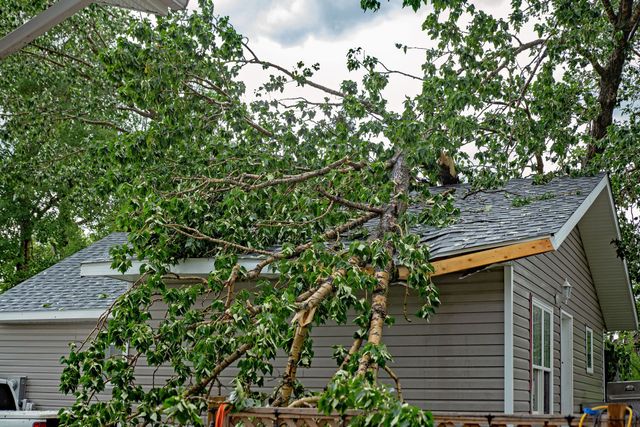
A roof, wall, or outbuilding can be damaged before the crew arrives. The work needs to account for what is already compromised and how loads may change during removal.
Identify where the trunk and branches meet the structure and which areas must be kept clear.
The plan may use rigging, staged sections, or lifting equipment to manage how the tree is removed.
Once the tree is removed, roof protection, structural assessment, and permanent repairs may need separate coordination.
Trees or heavy limbs lying across a house or penetrating the roof require careful assessment.
A fallen tree can affect the roof, supports, door openings, and access to vehicles.
Removal planning can account for tenant access, parking, delivery areas, and business operations.
Smaller structures may have limited strength or hidden damage after a tree impact.
Decks, covered patios, and screen structures can complicate access and tree handling.
Fences, parked vehicles, adjacent trees, or neighboring buildings may be involved in the same event.
Every property is different. Confirm the work, access, and finish in your project scope.
Review of visible tree position, roof contact, access, and the information needed for removal planning.
A defined sequence for handling limbs and trunk sections around the affected property.
Consideration of lifting equipment when conditions make it appropriate and equipment is available.
Coordination around driveways, gates, overhead utilities, ground conditions, and equipment staging.
Available photos and work notes that distinguish the initial impact from the removal and cleanup work.
Review of temporary tarping or further mitigation needs once the tree hazard has been addressed.
Removing the tree does not repair the building. Exposed roof areas may need temporary protection, and affected framing may need evaluation by an appropriate building professional. Confirm how those needs will be handled so the removal, protection, and repair work connect in the right order.
A straightforward process for understanding the property, setting expectations, and moving the work forward.
Provide the address, affected structure, visible damage, and photos already taken safely.
Review support points, access, utility concerns, weather, and equipment requirements.
Agree on the removal scope, authorization, staging, and temporary protection handoff.
Complete the agreed tree work, document accessible impact areas, and outline remaining property needs.
The proposal should identify which tree work, debris handling, and temporary protection are included. Building repair, interior drying, electrical work, and structural evaluation are separate services unless specifically arranged. A clear handoff helps property owners know who is responsible for the next step.
CAVALTREE coordinates service requests across the United States for homeowners, businesses, and property managers. Share your address and project details so we can confirm tree on structure removal availability in your area. Scheduling and dispatch depend on the location, conditions, equipment, and available crews.
CAVALTREE can review the situation and coordinate removal planning. The method, crew, and equipment depend on the tree’s position, structure condition, access, and availability in your area.
Do not enter or remain in an area affected by structural damage. Keep clear and seek guidance from emergency services or the appropriate building authority. A tree removal review does not establish that the building is safe to occupy.
No. Some removals use controlled rigging and sectional work; others may require a crane. The decision follows a site and equipment assessment.
Temporary roof protection can be reviewed as part of the response. Tree hazards, roof condition, weather, access, and crew availability determine what can be arranged. Confirm tarping in the written scope.
Permanent roofing and structural repairs are not automatically included. Confirm the tree removal, debris handling, temporary protection, and repair responsibilities separately.
Explain where the tree originated and which property is affected when requesting help. Access and work authorization must be confirmed. Direct questions about responsibility and coverage to the appropriate property and insurance contacts.
Tell us what was hit and where help is needed. Call for urgent removal coordination and a review of equipment and protection needs.