Emergency Tree Removal
Fallen trees, split trunks, and unstable limbs can leave your property exposed or cut off access. Start with a review of the hazard, access, and equipment needed.
Explore emergency removal

Tree on your roof? A large limb over the driveway? Storm debris blocking a business entrance? Call in the CavalTree. We coordinate emergency tree services in Atlanta, including fallen-tree removal, hazardous tree removal, storm cleanup, and temporary roof protection.
Need help beyond the emergency? Ask about tree removal, pruning and trimming, stump grinding, arborist services, and forestry mulching. See all tree services →
Tell us what happened or what work you need. For urgent storm help, call 877-509-4222. Fields marked * are required.
A tree emergency in Atlanta may affect several properties at once. Tell us whether a tree has struck a building, blocked a shared driveway, or left broken limbs above an occupied area so the removal and mitigation needs can be reviewed together.
Fallen trees, split trunks, and unstable limbs can leave your property exposed or cut off access. Start with a review of the hazard, access, and equipment needed.
Explore emergency removalA tree resting on your house, garage, roof, or enclosure needs controlled removal. The tree’s position and the affected structure guide the plan.
Explore structure removalA new lean, lifting roots, cracked trunk, or hanging branch deserves attention. Request an evaluation of the tree and the property around it.
Explore hazardous tree helpAfter the immediate hazards are handled, clear the agreed work areas of downed trees, limbs, and woody debris. Confirm hauling and cleanup in the scope.
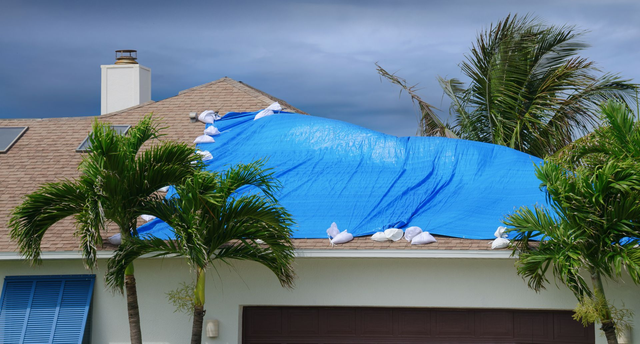
Explore storm cleanupWhen tree impact or severe weather leaves the roof exposed, temporary protection may be needed while permanent repairs are arranged.
Explore roof protectionTight access and heavy tree sections can require specialized equipment. Crane support and controlled rigging are reviewed around the job and available resources.
Discuss your situationA fallen tree in an Atlanta neighborhood can reach across a roof, fence, driveway, and neighboring yard. Mature trees, closely spaced homes, and limited side-yard access make the position of each damaged tree important to the removal plan.
After strong winds or heavy rain, describe any split trunks, newly leaning trees, or hanging limbs you can see from a safe place. Include steep driveways, gate dimensions, parked vehicles, and overhead lines when you explain how equipment could reach the property.
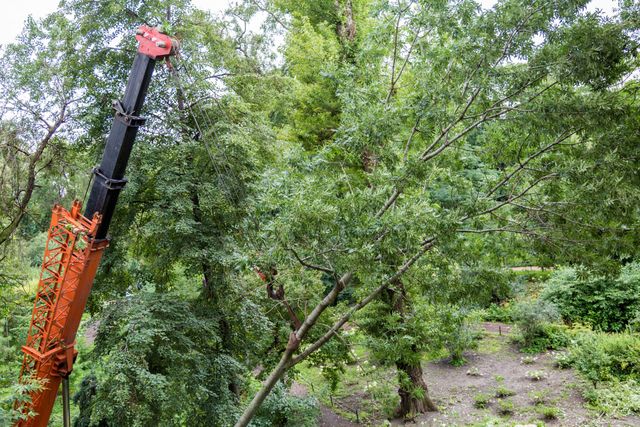
Trees crossing property lines or resting on a roof need a controlled removal plan that considers the affected building and the homes around it.
Driveway slope, retaining walls, narrow gates, and equipment staging space can affect how large tree sections are reached and handled.
Identify the owner or manager who can authorize work, arrange access, and coordinate around residents, customers, or shared parking.
Storm damage can leave several things competing for your attention. The first conversation helps identify the immediate problem and organize the work around it.
Call or send the address, the affected property, and a callback number. Share photos only if you can take them from a safe location.
The tree’s position, access, structure damage, and equipment needs help determine the work and available response options.
Review the scope, authorization, and scheduling so you know what is being arranged before work starts.
The agreed work moves forward, with a clear handoff for cleanup, temporary roof protection, or remaining repairs.
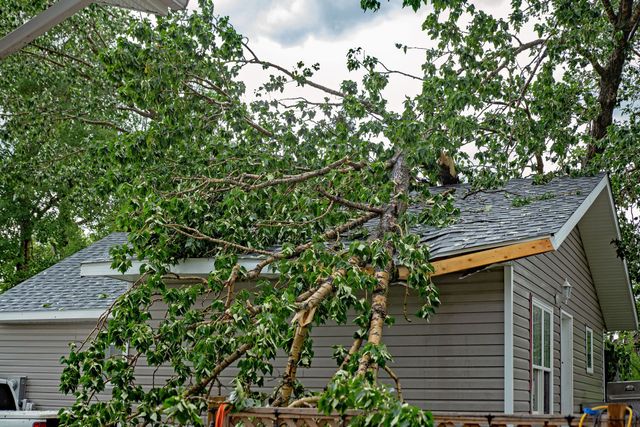
A tree resting on a house or garage needs a plan that accounts for the building underneath it. Controlled handling, equipment access, and the removal sequence all matter.
Once the tree is removed, the roof may still be open to the weather. Ask about temporary tarping and mitigation alongside the removal so the next step is part of the conversation.
For immediate danger to life, call 911 first. Keep clear of damaged structures and unstable trees. Report downed or contacted power lines to the utility; do not approach the hazard for photos.
Tree service: 877-509-4222When tree damage is part of an insurance claim, keep the work organized as the property changes. Available photographs, scope notes, equipment details, and invoices can help explain what was found and what was done.
Ask what documentation will be provided with your service. Coverage and payment decisions remain with your insurer.
Once the immediate hazard is addressed, other trees on an Atlanta property may still need attention. Request planned removal, pruning, stump grinding, an arborist evaluation, or forestry mulching for a larger land-care project.
Plan removal of dead, declining, unwanted, or poorly positioned trees, with the surrounding property and cleanup considered.
Address deadwood, low limbs, and clearance needs with pruning that fits the tree and the property.
Deal with the stump left behind. Review access, grinding depth, chips, and the next step for your landscape.
Get help evaluating tree condition, preservation options, pruning decisions, and concerns that need a closer look.
Plan brush reduction, selective clearing, and access improvements for overgrown land or larger properties.
One tree or a larger property project? Use the same request form and select the service you need. Include access details and your preferred timing.
Request tree service →Request emergency tree service in Atlanta or the surrounding metro communities below. Include the full property address and any shared-access restrictions so we can confirm availability and review the appropriate response.
Do not see your community? Send the address or call. Response timing depends on conditions, access, equipment, and available crews. View all storm response areas →
CAVALTREE coordinates emergency tree removal, tree on structure removal, hazardous tree removal, storm damage cleanup, and roof tarping and mitigation. The work is reviewed around the property, access, equipment, and available crews.
Call 877-509-4222 with the address and a description of the damage. Timing depends on conditions, access, equipment needs, and available crews. During a major storm, arrival and dispatch are confirmed after the request is reviewed.
Tell us where the tree is resting and which buildings, fences, or access routes are affected. Closely spaced homes, narrow side yards, and overhead utilities can influence the equipment and removal sequence. Access and authorization are reviewed before work is arranged.
Temporary roof protection can be reviewed along with the tree removal. Confirm tarping in the agreed scope. Roof condition, weather, access, and crew availability affect the work; permanent roof repairs are arranged separately.
Yes. You can request tree removal, tree pruning and trimming, stump grinding, arborist services, and forestry mulching. Tell us whether you need urgent storm help or are planning ongoing property care so the request can be routed appropriately.
Requests can be reviewed for Decatur, Sandy Springs, Brookhaven, Smyrna, Marietta, Roswell, Alpharetta, and other communities listed above. Include the exact property address to confirm service availability, access, and response options.
Ask for available damage photos, the removal scope, equipment and access notes, and invoices. Those records can help organize your claim documentation. Your insurer determines coverage and payment.
Stay clear of the tree, line, and nearby objects. Contact the utility to report the hazard. For injury, fire, collapse, or immediate danger to life, call 911 first. Do not approach an unsafe tree or damaged roof to take photos.
From a tree on a home to debris blocking a shared entrance, tell us what is affected and where it is in Atlanta. We will help review removal, cleanup, and temporary protection needs.