Know how equipment gets in
Gate width, turns, slope, and ground conditions affect whether equipment can reach the stump.


A tree may be gone, but the stump can still be in the way. CAVALTREE helps homeowners and property managers plan stump grinding to reduce an obstacle, improve usable yard space, and prepare for the next stage of landscaping.
Tell us where the work is and what you need. Fields marked * are required.
Grinding a stump is not the same as leaving a finished lawn behind. Chips, remaining roots, soil level, and the intended use of the area all matter. Whether you want to mow more easily, add planting space, or deal with several old stumps, the best starting point is an honest conversation about the finished result you expect.
Stump grinding uses specialized equipment to break down the stump into wood chips below the agreed surface level. It is different from excavating the entire root system. Grinding depth, visible roots, chip removal, and backfill should be defined before work begins.
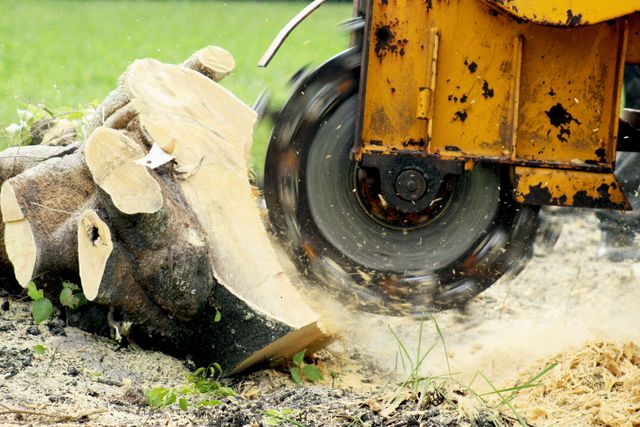
Established yards often combine tight gates, irrigation, pavers, buried lines, and established landscaping. A good grinding plan accounts for all of them.
Gate width, turns, slope, and ground conditions affect whether equipment can reach the stump.
Utility locations, private irrigation, lighting wires, and other buried features need attention before grinding.
Grinding, chip hauling, soil backfill, and new sod are separate pieces of work. Make the scope match your goal.
Grinding may help remove an obstacle that makes routine lawn care awkward.
A stump in a regularly used area can interfere with walking, playing, or moving equipment.
Discuss the depth and finish needed for a planting bed, lawn area, or other improvement.
Grinding can be arranged separately when a stump was not included in the original removal.
Group the locations and access details so the work can be evaluated as one project.
Removing the visible stump can improve the appearance and usability of the area.
Every property is different. Confirm the work, access, and finish in your project scope.
Assessment for one remaining stump in a front yard, backyard, or shared area.
Plan access, staging, and cleanup across several stump locations.
Coordinate grinding after tree removal once access and the remaining stump are known.
Discuss the intended use of the area before choosing the grinding depth and finish.
Evaluate whether visible roots are part of the job and whether nearby trees could be affected.
Choose what happens to the wood chips and whether additional soil or restoration is needed.
A future lawn, flower bed, walkway, and new tree each raise different questions. Tell us what you want to do with the area so the grinding scope can be evaluated against that goal. Remaining roots and decomposing wood may still affect the site after the visible stump has been reduced.
A straightforward process for understanding the property, setting expectations, and moving the work forward.
Include the address, number of stumps, approximate size, and photos.
Review gates, obstacles, ground conditions, and buried-feature concerns.
Confirm depth, included roots, chip handling, and the expected finish.
Complete the agreed work and explain any remaining restoration tasks.
Stump diameter, root flare, wood condition, the number of stumps, and equipment access all influence the job. A stump behind a narrow gate can be a different project from one beside an open driveway. Extra depth, chip hauling, and restoration can also change the scope. Include a wider photo showing the approach to the stump, not just a close-up of the wood.
CAVALTREE coordinates service requests across the United States for homeowners, businesses, and property managers. Share your address and project details so we can confirm stump grinding availability in your area. Scheduling and dispatch depend on the location, conditions, equipment, and available crews.
No. Grinding generally reduces the stump and the agreed portion of nearby roots. The remaining root system usually stays in the ground unless excavation is separately specified.
Depth should be agreed after reviewing the site and your plans for the area. Nearby utilities, access, equipment, and the intended use can influence what is appropriate.
Only if that is included in the scope. Ask whether chips stay on-site, are partially removed, or are hauled away, and whether backfill is included.
The remaining roots and wood, soil condition, drainage, and species choice should be assessed. A nearby planting location may be more suitable than the exact stump location.
That depends on gate dimensions, turns, terrain, and equipment access. Send a photo and the clear gate width so access can be reviewed.
Identify the stump locations and access route, and disclose irrigation, lighting cables, septic components, or other buried features you know about. Confirm utility locating and site preparation before the work date.
Send the stump locations and a few photos. Let’s define the work needed to make the space useful again.